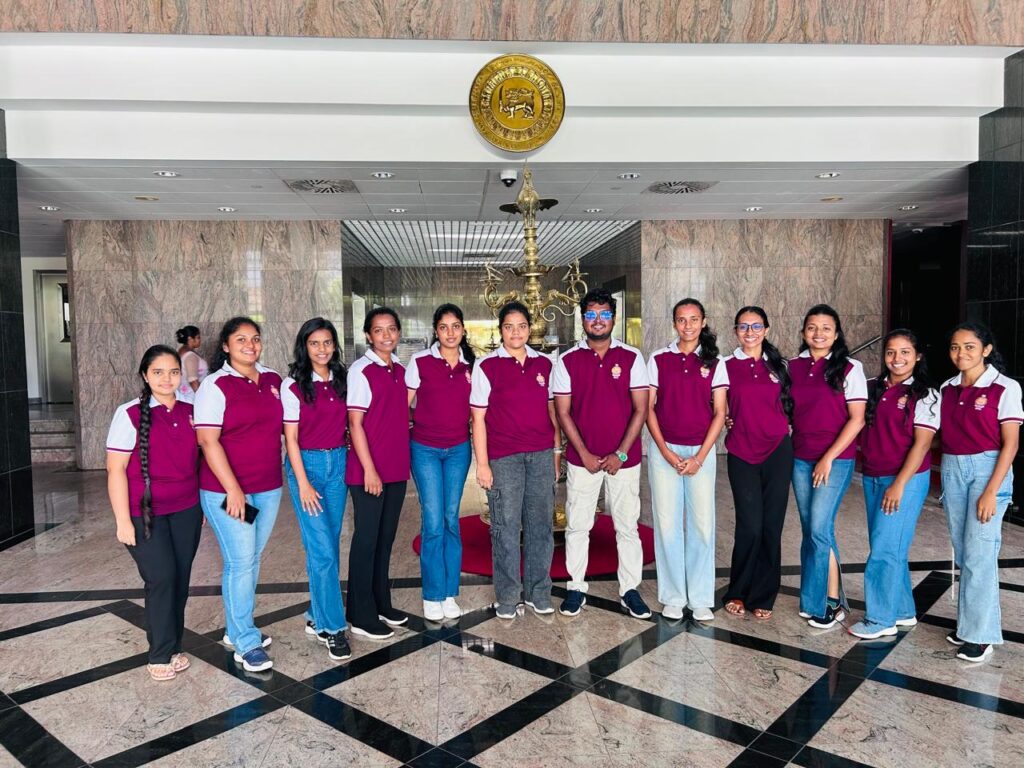
The educational visit to the Central Bank of Sri Lanka (CBSL), conducted on 10.06.2026, provided third-year students of the Department of Industrial Management Studies, Faculty of Applied Sciences, Wayamba University of Sri Lanka, with a valuable opportunity to gain practical insights into the country’s central banking operations and economic management mechanisms.
The program provided students with a better understanding of important areas such as monetary policy, interest rate determination, inflation control, financial system stability, risk management, and foreign exchange management. Through presentations and interactive sessions conducted by Central Bank officials, students were able to relate classroom knowledge to real-world economic and financial practices.
The sessions emphasized the important role of the Central Bank of Sri Lanka in maintaining price stability, regulating the financial system, managing foreign reserves, and supporting economic growth. Students also gained insight into the policies and decision-making processes that influence the country’s economy and financial sector.
The visit helped participants understand the responsibilities and challenges involved in central banking, particularly in maintaining economic stability and ensuring a resilient financial system. The interactive discussions allowed students to engage with experts, ask questions, and further improve their understanding of current economic issues.
The program served as a valuable learning experience by enhancing students’ academic knowledge while providing practical exposure to the functions of Sri Lanka’s monetary authority. It also reflected the commitment of Wayamba University of Sri Lanka to enriching undergraduate education through experiential learning opportunities that connect theory with practice.
The successful completion of the visit strengthened students’ understanding of economic management and highlighted the importance of central banking institutions in maintaining financial stability and supporting sustainable economic development.